
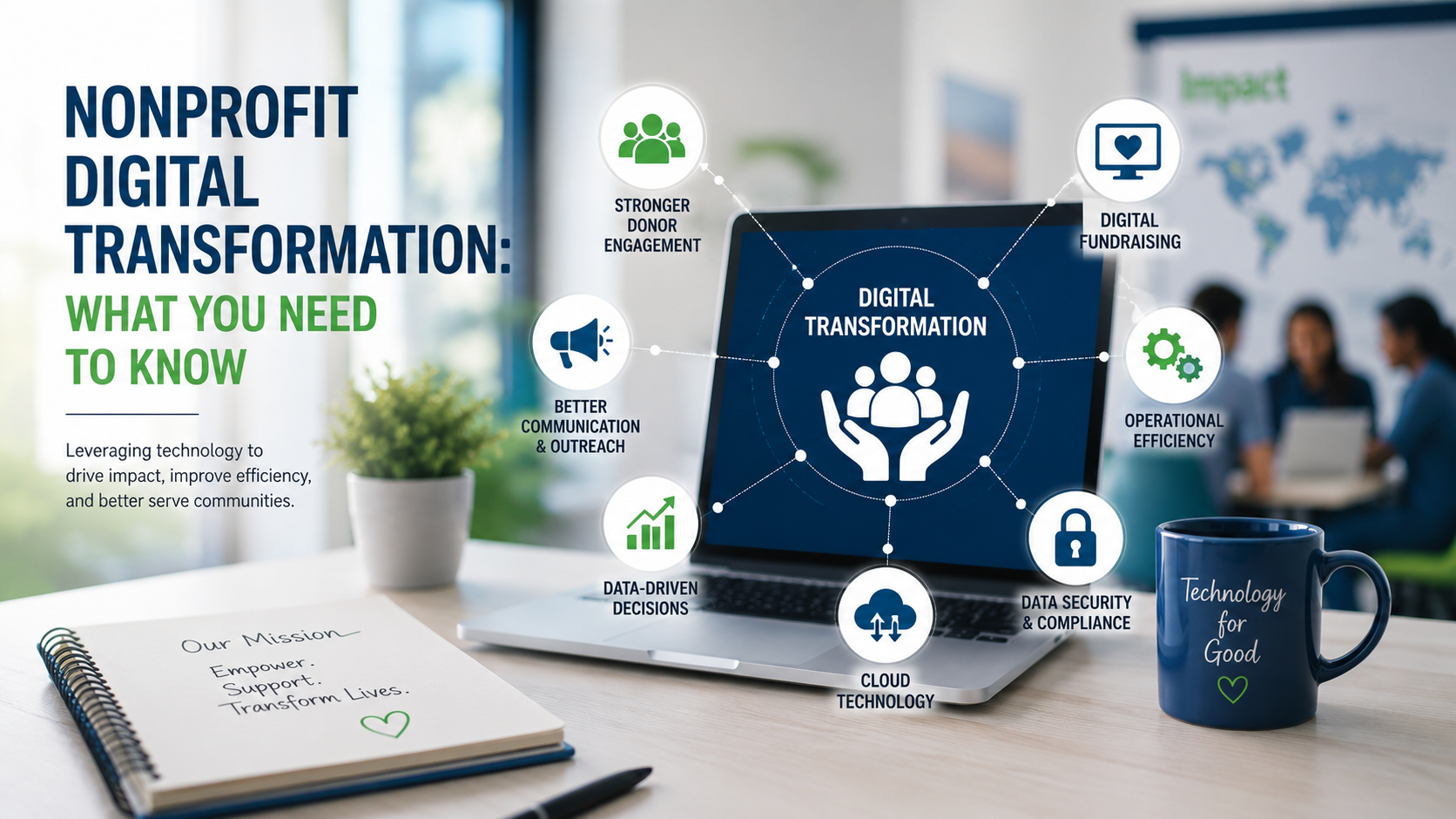
The charitable sector is constantly evolving, and organisations that fail to adapt risk falling behind. As technology continues to reshape how people communicate, donate and engage with causes, digital transformation has become essential for nonprofits looking to maximise their impact.
Digital transformation is about much more than moving files to the cloud or introducing new software. It involves rethinking how your organisation operates, collaborates and delivers value by embedding technology into everyday processes.
For many charities, this journey may seem complex. However, with the right strategy and expert Salesforce Implementation, organisations can modernise their operations while maintaining focus on their mission.
According to the Charity Digital Skills Report, produced in partnership with NCVO (National Council for Voluntary Organisations) and other sector organisations, improving digital capability remains a strategic priority for UK charities. The report highlights that many organisations recognise digital transformation as essential for improving operational efficiency, engaging supporters and delivering greater impact.
Why Digital Transformation Matters for Your Nonprofit
Digital transformation helps charities become more efficient, transparent and responsive. Rather than simply adopting new technology, it enables organisations to improve the way they engage supporters, manage operations and demonstrate measurable impact.
Here are some of the key benefits.
Improve Donor Engagement
Today's supporters expect personalised communication and seamless digital experiences. Modern CRM systems allow charities to segment audiences, personalise messaging and strengthen relationships throughout the donor journey, helping improve donor retention over time.
Increase Operational Efficiency
Manual processes often consume valuable staff time and increase the likelihood of errors. Automating routine activities such as donation acknowledgements, volunteer registrations, reporting and email communications enables teams to focus on delivering meaningful outcomes.
Demonstrate Greater Impact
Funders, trustees and stakeholders increasingly expect organisations to provide measurable evidence of their impact. Digital systems make it easier to collect, analyse and report data, improving transparency and accountability.
Expand Your Reach
Through websites, social media, email marketing and digital fundraising campaigns, charities can connect with supporters across the UK and beyond without geographical limitations.
Modernise Fundraising
Online giving platforms simplify the donation process by offering secure payment methods, recurring giving options and mobile-friendly experiences, making it easier for supporters to contribute whenever they choose.
Improve Team Collaboration
Many charities operate with remote staff, volunteers and regional teams. Cloud-based collaboration tools enable everyone to access information securely, communicate effectively and work together regardless of location.
Build Trust Through Transparency
Accurate financial reporting, programme monitoring and donor management help organisations maintain transparency, strengthening confidence among supporters, grant providers and trustees.
Key Areas of Technology Adoption in Nonprofits
A successful digital transformation strategy focuses on adopting technology that directly supports organisational objectives rather than implementing new tools for their own sake.
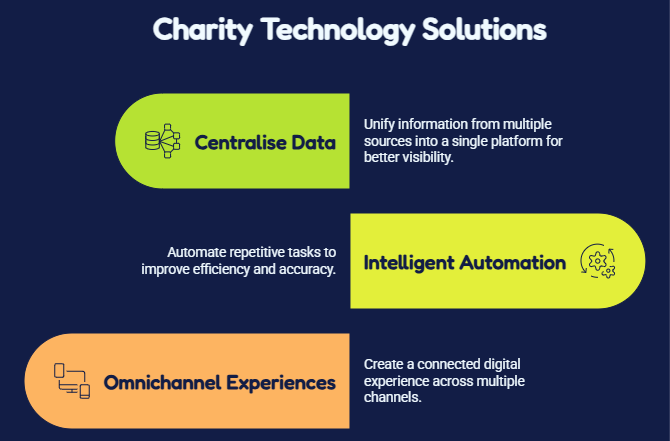
1. Centralise Your Data
Many charities continue to manage information across multiple spreadsheets and disconnected systems. This creates data silos that limit visibility and reduce operational efficiency.
A unified CRM such as Salesforce Nonprofit Cloud enables organisations to manage donor information, volunteer records, fundraising activities and programme outcomes from a single platform, providing a clearer view of organisational performance.
2. Introduce Intelligent Automation
Automation allows charities to eliminate repetitive administrative tasks while improving consistency and accuracy.
With professional Salesforce Development Services, organisations can automate workflows such as donation receipts, volunteer onboarding, grant reminders, fundraising communications and reporting. This reduces administrative workload and allows teams to dedicate more time to delivering services and engaging supporters.
3. Deliver Omnichannel Supporter Experiences
Supporters now engage with charities through multiple channels, including websites, social media, search engines, email campaigns and mobile devices.
Creating a connected digital experience ensures supporters receive consistent communication regardless of where they interact with your organisation. Integrating fundraising, marketing and supporter engagement into one digital ecosystem improves both user experience and operational efficiency.
Managing Organisational Change Successfully
Technology alone does not deliver transformation. Successful change depends on people embracing new ways of working.
Organisations should introduce digital initiatives gradually while providing clear communication, ongoing training and opportunities for feedback.
Communicate the Vision
Help employees and volunteers understand why digital transformation is necessary and how it will improve their daily work. When teams understand the purpose behind change, they are more likely to support it.
Focus on Early Successes
Rather than attempting to modernise every department simultaneously, begin with manageable projects such as digital volunteer registration, automated donor acknowledgements or online fundraising forms.
Small successes help build confidence and encourage wider adoption across the organisation.
Invest in Continuous Learning
Providing regular training sessions, guidance materials and ongoing support ensures staff remain confident using new systems as technology continues to evolve.
Encourage Feedback
Digital transformation should be an ongoing process. Creating opportunities for employees to share feedback allows organisations to improve systems and address challenges before they become larger issues.
Prioritise User Experience
Technology should simplify everyday work rather than make it more complicated. Selecting intuitive solutions that meet the needs of staff, volunteers and beneficiaries encourages stronger adoption and better long-term results.
Building a Future-Ready Charity
Digital transformation is no longer simply about improving efficiency. It enables charities to strengthen donor relationships, improve service delivery and make more informed decisions through accurate data and connected systems.
As technology continues to evolve, organisations that invest in digital innovation today will be better equipped to respond to changing community needs, funding opportunities and supporter expectations.
Conclusion
Digital transformation gives nonprofits the opportunity to become more agile, transparent and resilient while expanding their social impact.
However, successful transformation requires careful planning, the right technology and experienced guidance. Whether you're introducing a new CRM, improving fundraising processes or streamlining internal operations, every step should support your organisation's long-term goals.
Working with experts who provide Salesforce Customization Services can help ensure your CRM is tailored to your organisation's unique requirements, improving user adoption, operational efficiency and long-term value.
Start with achievable improvements, build on early successes and create a digital foundation that enables your organisation to continue making a meaningful difference for years to come.