

Death and Taxes for Nonprofits may sound like an unusual combination, but for smart nonprofit leaders, these inevitable realities present valuable opportunities for long-term financial sustainability. While the phrase "death and taxes" often evokes a sense of inevitability, in the world of philanthropy it represents the intersection of a donor's legacy, estate planning, and an organisation's future financial stability.
Most supporters want to leave the world better than they found it, yet many remain unaware that their final financial footprint can be their most impactful one. Charitable giving hit over $592 billion last year, proving that bequests and long-term planning remain a cornerstone of philanthropy.
From estate giving to tax-efficient donations, there are multiple ways nonprofits can achieve growth while helping donors make smarter financial decisions. This guide explores how nonprofits can use nonprofit tax planning, maximize financial opportunities for charities, and encourage legacy giving to create lasting impact.
Estate Giving vs. Legacy Giving
When a donor considers their long-term impact, estate giving often emerges as the most flexible and significant way to contribute. Unlike a standard monthly donation, these gifts allow individuals to commit to the future without affecting their current cash flow.
With this approach, donors can contribute larger amounts than they might be able to during their lifetime, while also offering potential tax advantages. For nonprofits, estate giving provides a sense of long-term financial stability. More importantly, it allows you to connect with donors to see that their financial support is actively serving the specific causes they hold dear. With the right Salesforce consulting, nonprofits can also manage and track estate giving programs more effectively.
At the same time, Legacy giving, while closely related, goes a step further by focusing on long-term relationships. It includes estate gifts but also extends to planned contributions such as charitable trusts, endowments, and other structured giving methods. Besides transactions, legacy giving builds an enduring partnership between the donor and the nonprofit. Salesforce consulting helps organizations streamline donor management and strengthen these long-term relationships.
It encourages donors to see themselves as part of a lasting mission, one that continues to create impact for years to come. When nonprofits nurture these relationships through storytelling, guidance, and recognition, it becomes a shared purpose.
7 Ways Nonprofits Create New Financial Opportunities
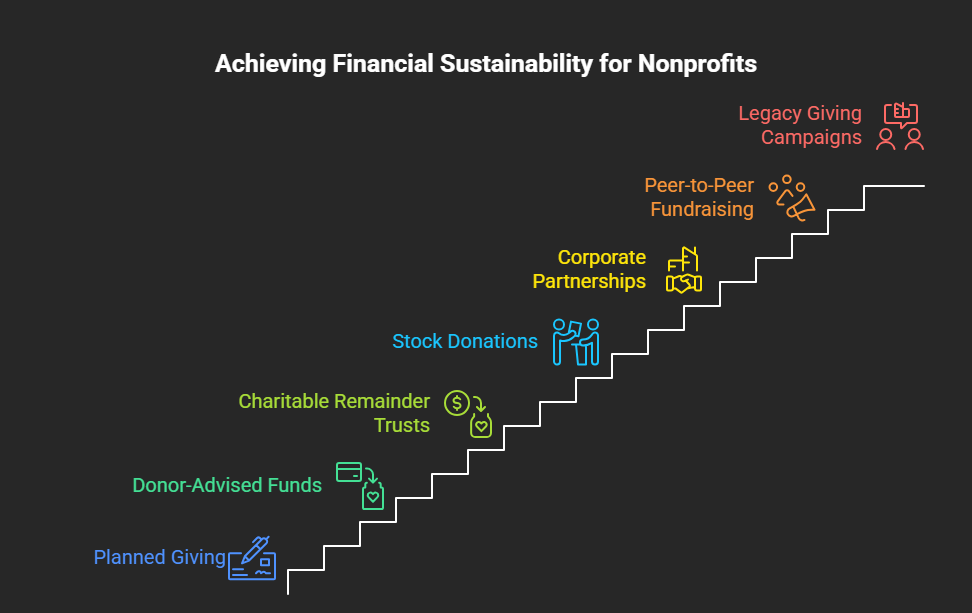
Many nonprofits unintentionally limit their potential by relying heavily on traditional fundraising methods. To some extent, strategies like events, grants, and direct donations are viable options. For a more sustainable future, you must actively explore broader financial opportunities. Here is how you can do that:
To manage these complex financial streams and donor relationships efficiently, a strong technology platform is vital. Many organizations seek expert Salesforce Nonprofit Cloud consulting to integrate these giving methods effectively.
Planned Giving Programs
Planned giving programs allow nonprofits to create structured pathways for donors to contribute through wills, trusts, and life insurance policies. These programs make giving more accessible for individuals who may not have the capacity to donate large amounts during their lifetime but still want to leave a meaningful impact.
Donor-Advised Funds
Donor-Advised Funds provide a simple and tax-efficient way for individuals to support nonprofits. Donors contribute to a fund, receive immediate tax benefits, and then recommend grants to charities over time. Educating your donor base on DAFs and reducing friction in the donation process helps access billions in existing charitable capital.
Charitable Remainder Trusts
If you have highly appreciated assets (like stock or real estate) and want to avoid a massive tax hit when you sell, a Charitable Remainder Trust is a smart move. You can convert those assets into a steady income stream, defer capital gains taxes, and get an immediate tax deduction, all while supporting a charity close to your heart.
Stock Donations
Avoid taxes reducing your donation. Instead of liquidating securities and paying taxes on the gains, transfer them directly to a trusted nonprofit. It allows individuals to make a greater philanthropic impact and helps diversify their portfolio, all while potentially receiving a deduction for the full market value of the stock.
Corporate Partnerships
Corporate firms are eager for opportunities to enhance their reputation with social responsibility efforts. Your nonprofits, in that case, provide a meaningful platform for that engagement. By offering sponsorship opportunities, co-branded campaigns, or long-term collaborations, they will secure consistent financial and in-kind support.
Peer-to-Peer Fundraising
Peer-to-peer fundraising empowers supporters to raise funds on behalf of the nonprofit by leveraging their personal networks. This approach expands reach without significantly increasing marketing costs. When nonprofits provide the right tools and messaging, supporters become advocates, helping the organization access new audiences and donors organically.
Legacy Giving Campaigns
Dedicated legacy giving campaigns encourage donors to think beyond immediate contributions and consider the long-term impact of their support. By sharing stories, offering guidance, and recognizing contributors, nonprofits can inspire donors to include the organization in their estate plans. This approach creates a lasting connection while ensuring future financial stability.
How Giving to Nonprofits Can Reduce Tax Burden?
Taxes and charity create a perfect win-win. To maximize this, position your nonprofit as a strategic partner. Donor having high-net-worth constantly searching for efficient ways to lower their tax liability. Your charity, in that case, serves as the perfect vehicle to reach such financial goals.
If you really want to transform your role from a solicitor to a solution provider, understanding tax strategies will change everything. As a result, you let sophisticated donors make their wealth work harder for your cause. Salesforce integration services can help nonprofits streamline donor data and giving records to support these efforts.
For instance, optimize your donation by transferring highly appreciated stock. It may involve stocks or property as a gift directly to your charity. This approach lets you bypass the tax on the gain entirely, while your nonprofit receives the full market value of the asset. In addition to tax relief, it protects the wealth donors have worked a lifetime to build, ensuring more goes to family and causes they love.
Large estates often face heavy taxation that can significantly shrink the inheritance left for loved ones or community projects. You should encourage charitable bequests to reduce the overall taxable value of their estate. Ultimately, this helps your wealth support a cause you love over a higher tax bill.
To end things off, individuals often hold off on giving due to tax fears. Show them how to turn those challenges into charitable opportunities. Let them strengthen their portfolio and empower your mission.
Wrapping Up
Death and taxes don’t have to be the sad end of someone's financial story. For a forward-thinking nonprofit, they're actually a chance to start a powerful new chapter for your mission.
With nonprofit tax planning as part of your core development strategy, you provide them with a sense of peace. They gain the confidence that their hard-earned assets will continue to fight for the causes they love, long after they are gone.
Don't wait for a designated season to talk about the future. Successful leaders bring these conversations to the table today, turning anxiety into optimism.
To ensure you are maximizing every benefit while staying fully compliant, it is essential to consult with legal and financial experts. For those looking to manage these financial opportunities efficiently and integrate donor data, professional guidance is key. You may need specific help with Salesforce Nonprofit Cloud implementation to handle complex planned giving data and reporting. Working with professionals who specialize in financial opportunities for charity allows you to provide donors with accurate, high-level advice.
FAQs
What is nonprofit tax planning?
Nonprofit tax planning is the process of developing tax-efficient fundraising and financial strategies that help charities maximise donations while allowing donors to reduce their tax liabilities through qualified charitable contributions, planned giving, and estate planning.
Why is nonprofit tax planning important for charities?
Nonprofit tax planning helps charities improve long-term financial sustainability, increase donor confidence, optimise fundraising opportunities, and ensure compliance with tax regulations while supporting larger charitable contributions.
How does estate giving support nonprofit tax planning?
Estate giving is an important part of nonprofit tax planning because it allows donors to include charitable organisations in their wills or estates, helping reduce taxable estates while creating a lasting financial legacy for the nonprofit.
Can donors receive tax benefits from charitable giving?
Yes. Depending on local tax laws, donors may receive deductions or other tax advantages through cash donations, stock donations, donor-advised funds, charitable trusts, and planned giving arrangements. It is always recommended to consult a qualified tax adviser.
How can Salesforce help with nonprofit tax planning?
Salesforce Nonprofit Cloud helps organisations manage donor records, planned giving campaigns, fundraising activities, grant management, reporting, and donor engagement from a single platform, making nonprofit tax planning more organised and data-driven.
What are the best financial opportunities for charities?
Some of the most effective financial opportunities include:
- Planned Giving
- Legacy Giving
- Donor-Advised Funds
- Corporate Partnerships
- Stock Donations
- Charitable Remainder Trusts
- Peer-to-Peer Fundraising
These strategies help diversify revenue while supporting long-term nonprofit growth.
Maximise Your Nonprofit's Fundraising Potential with ProvidusCRM
Managing planned giving, donor relationships, and fundraising data becomes much easier with the right CRM solution. At ProvidusCRM, we help nonprofit organisations implement and customise Salesforce Nonprofit Cloud to streamline donor management, improve fundraising performance, and support long-term growth. Whether you're planning a new implementation or looking to optimise your existing Salesforce environment, our experts are here to help.
Get in touch today: Contact Us